


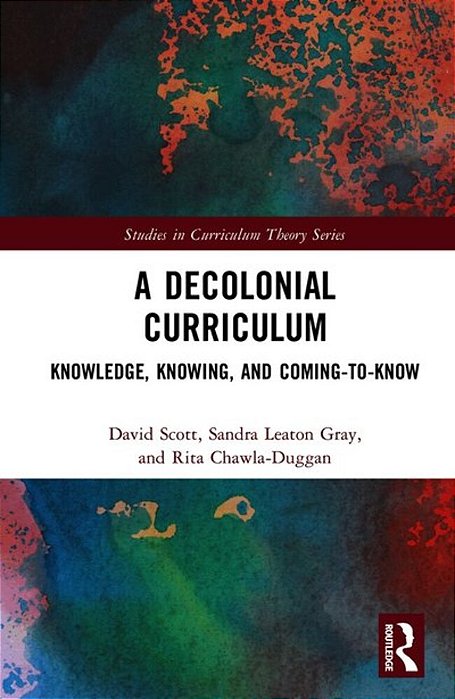
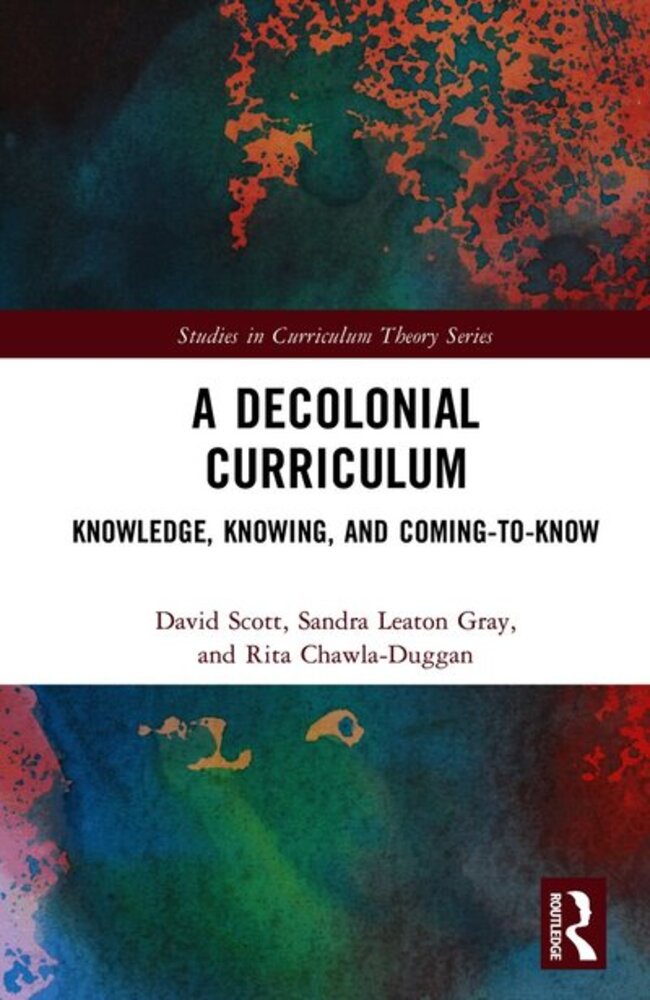
A Decolonial Curriculum: Knowledge, Knowing, And Coming-To-know-..
até
4x
de
R$ 388,42
sem juros
ou R$ 1.476,02
via Pix
Adicionar ao carrinho
Disponibilidade: 45 dias úteis
Estoque: 1161 unidades
-
- 1x de R$ 1.553,70 sem juros
- 2x de R$ 776,85 sem juros
- 3x de R$ 517,90 sem juros
- 4x de R$ 388,42 sem juros
-
R$ 1.476,02

-
R$ 1.553,70


A Decolonial Curriculum advances the claim that a decolonial and transcolonial curriculum must be grounded in a substantive account of what human beings do, have done, and might yet do.It proposes twelve fundamental domains of human life - knowing, communicating, genealogising, positioning, cognising, understanding, enhancing, philosophising, acting in the world, valuing, embodying, and creating - as generative elements for curriculum design. Taken together, these domains offer a non-reductive framework that resists the false dichotomy between 'colonial' epistemologies and 'indigenous' ways of knowing and being. Rather than opposing knowledge traditions, the book argues for a pedagogy that is dialogical, embodied, and reflexive, while recognising the limits of decolonial critique alone. It therefore advances a transcolonial pedagogy oriented towards hybrid, relational, and productive epistemic formations, capable of preparing learners for materially and historically interconnected futures.It is an essential read for academics, educators, policymakers, and anyone engaged in designing, developing, and rethinking curriculum.
Scott, David
David Scott (Estados Unidos) é professor do Departamento de Ciências da Recreação, Parques e Turismo na Universidade Texas A&M. Pesquisa a especialização na recreação, o lazer sério e as restrições ao lazer e tem publicado em inúmeras revistas acadêmicas. David trabalhou como editor do Journal of Leisure Research de 2002 a 2007. Foi eleito membro da Academy of Leisure Sciences em 2007, e agraciado com o prêmio Theodore and Franklin Roosevelt for Excellence in Recreation and Park Research oferecido anualmente pela National Recreation and Park Association. |
| ISBN | 9781041135722 |
| Autor(a) | Scott, David |
| Editora | Routledge |
| Ano de edição | 2026 |
| Páginas | 224 |
| Acabamento | Capa Dura |
| Dimensões | 22,90 X 15,20 |
Produtos relacionados
-
 Colonial And Decolonial Linguistics: Knowledges And Epistemes-..
R$ 1.162,00R$ 929,60até 4x de R$ 232,40 sem jurosou R$ 883,12 via Pix20% Desconto -
 Itinerant Curriculum Theory: Decolonial Praxes, Theories, And Histories-..
R$ 439,49R$ 351,59até 4x de R$ 87,89 sem jurosou R$ 334,01 via Pix20% Desconto -
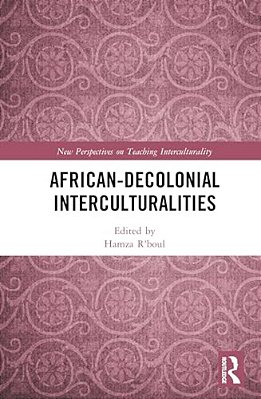
 African-Decolonial Interculturalities-..
R$ 539,42R$ 431,54até 4x de R$ 107,88 sem jurosou R$ 409,96 via Pix20% Desconto -
 African-Decolonial Interculturalities-..
R$ 1.942,12R$ 1.553,70até 4x de R$ 388,42 sem jurosou R$ 1.476,02 via Pix20% Desconto
-

Categorias
Pague com

Selos

MYRE EDITORA, COMERCIALIZADORA, IMPORTADORA E DISTRIBUIDORA LTDA - CNPJ: 50.295.718/0001-20 © Todos os direitos reservados. 2026
