


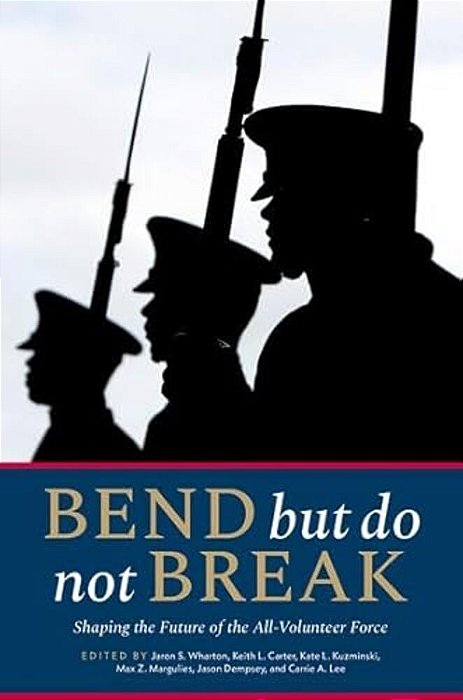
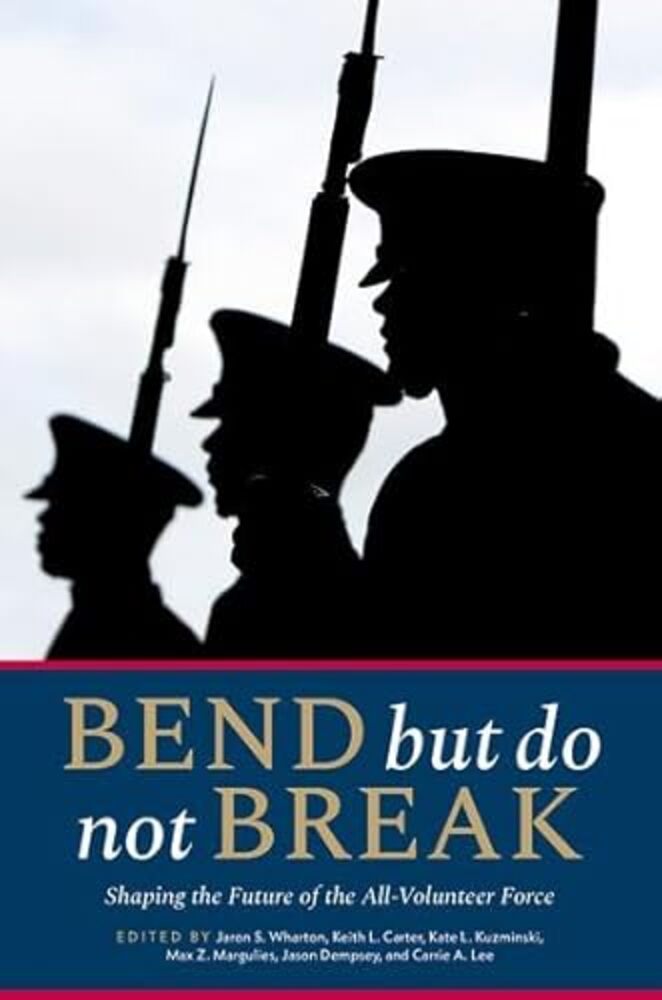
Bend But Do Not Break: Shaping The Future Of The All-Volunteer Force-..
até
4x
de
R$ 182,60
sem juros
ou R$ 693,88
via Pix
Adicionar ao carrinho
Disponibilidade: 45 dias úteis
Estoque: 214 unidades
-
- 1x de R$ 730,40 sem juros
- 2x de R$ 365,20 sem juros
- 3x de R$ 243,46 sem juros
- 4x de R$ 182,60 sem juros
-
R$ 693,88

-
R$ 730,40


"The American military's All-Volunteer Force (AVF), which recently celebrated its 50th anniversary, is unique within American history. It deviates from popular conceptions of war and the military driven by the narratives of mass mobilization during World War II - and from the flawed conscription system that led directly to its birth. The move to end conscription was controversial, and it was unclear whether a force comprised solely of volunteers could effectively meet the nation's security needs. The initial years were turbulent as the military grappled with rampant drug use, racial conflict, and a generally demoralized force. Yet, these were also years of reformation and rebuilding. The military grew larger, more generously resourced, and more martially capable than it had ever previously been absent an active major conflict. This period of transformation culminated in its battlefield dominance during the 1991 Gulf War, which at the time was celebrated as the moment that the American military could fully break from the memory of Vietnam. But that lightning-fast, tactical victory would be followed by a decade of peacekeeping and minor conflicts around the world, followed by two decades that saw the AVF strain as it shouldered the burden of fighting both in Iraq and in what would become the longest war in American history in Afghanistan. So, what is the future of America's AVF? The motivation for addressing this question extends beyond its more recent anniversary. Over the last twenty years observers have frequently questioned the nature of the American military and its relationship to both political leaders and the broader society it serves. This disconnect has been tied to a host of challenges facing the AVF and, by extension, American democratic health. While there are benefits to the current system, structural flaws warrant interrogation if we want to celebrate the AVF's 100th anniversary. This book therefore seeks to move the conversation around the American military past stereotypes and platitudes of support that pass for engagement. Informed and critical engagement with the military is essential for ensuring both the competence of the force and continued support for that force among the American people"-- Provided by publisher.
Produtos relacionados
-
 Around Which All Things Bend-..
R$ 248,59R$ 198,87até 3x de R$ 66,29 sem jurosou R$ 188,93 via Pix20% Desconto -
 Around Which All Things Bend-..
R$ 165,59R$ 132,47até 2x de R$ 66,23 sem jurosou R$ 125,85 via Pix20% Desconto -
 Quilts Of Gee's Bend Notes-..
R$ 132,39R$ 105,91até 2x de R$ 52,95 sem jurosou R$ 100,61 via Pix20% Desconto
-


Categorias
Pague com

Selos

MYRE EDITORA, COMERCIALIZADORA, IMPORTADORA E DISTRIBUIDORA LTDA - CNPJ: 50.295.718/0001-20 © Todos os direitos reservados. 2026