


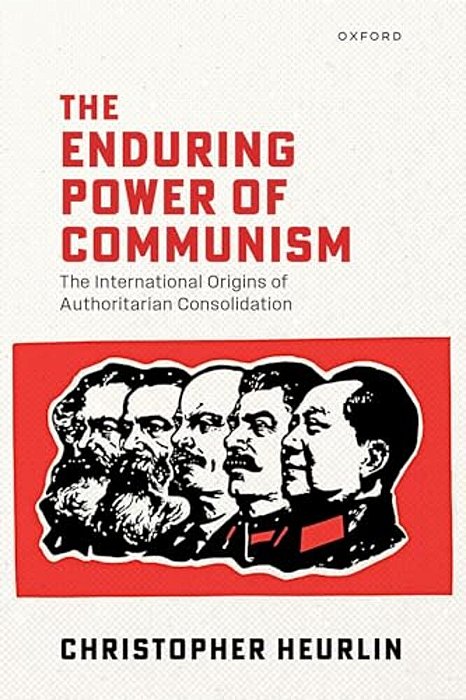
Enduring Power Of Communism: The International Origins Of Authoritarian Consolidation-..
até
4x
de
R$ 273,90
sem juros
ou R$ 1.040,82
via Pix
Adicionar ao carrinho
Disponibilidade: 45 dias úteis
Estoque: 167 unidades
-
- 1x de R$ 1.095,60 sem juros
- 2x de R$ 547,80 sem juros
- 3x de R$ 365,20 sem juros
- 4x de R$ 273,90 sem juros
-
R$ 1.040,82

-
R$ 1.095,60


The Enduring Power of Communism explores why communist dictatorships in Asia and Latin America have been so durable, despite being relatively weak when they came to power. The book encompasses a comparative historical analysis of all seven non-European communist regimes: China, Vietnam, North Korea, Cuba, Laos, Cambodia, and Mongolia. Drawing on research in the East German archives, Heurlin argues the origins of communist durability lay in an extraordinary campaign by the Soviet Union and the Eastern Bloc to promote communism abroad. Moscow sent tens of thousands of advisors to fledgling communist regimes in the developing world, helping them to establish powerful state bureaucracies that could plan and direct economic development. Soviet economic aid financed the construction of scores of state-owned enterprises (SOEs) that granted communist rulers tremendous control of the economy. SOEs channelled tax revenues to rulers, while also serving as sites of social domination, granting communist parties tremendous authority over society. These increases in state power were made possible because of the similarities in institutions between communist donors and communist aid recipients. Once they embarked on these state-building strategies, their paths diverged markedly. Cambodia failed to consolidate its authoritarian institutions, in stark contrast to the experiences in neighbouring Vietnam and Laos. Authoritarian consolidation occurred in North Korea and China, only to be disrupted by radical campaigns like the Great Leap Forward that attacked the very state bureaucracies they had just built. Elsewhere in Mongolia and Cuba the process of authoritarian consolidation was protracted and delayed for over a decade. Most notably, communism collapsed in Mongolia and Cambodia at the end of the Cold War as ruling parties renounced their monopoly on power and initiated democratic elections. The Enduring Power of Communism explains why these divergent pathways emerged. Outside of the communist camp the results of Soviet aid were less impressive. Soviet efforts in Ghana ended in spectacular failure: the economy cratered and its ruler, Kwame Nkrumah, was overthrown by a military coup. Far from an outlier, this marked a pattern: while Soviet aid strengthened communist regimes, it made non-communist regimes more vulnerable to military coups.
Produtos relacionados
-
 Democracies And Authoritarian Regimes-..
R$ 722,02R$ 577,62até 4x de R$ 144,40 sem jurosou R$ 548,74 via Pix20% Desconto -
 Democratic Consolidation In Eastern Europe: Volume 1: Institutional Engineering-..
R$ 390,02R$ 312,02até 4x de R$ 78,00 sem jurosou R$ 296,42 via Pix20% Desconto -
 Assessment, Bureaucracy, And Consolidation: The Issues Facing Schools Today-..
R$ 389,69R$ 311,75até 4x de R$ 77,93 sem jurosou R$ 296,16 via Pix20% Desconto

Categorias
Pague com

Selos

MYRE EDITORA, COMERCIALIZADORA, IMPORTADORA E DISTRIBUIDORA LTDA - CNPJ: 50.295.718/0001-20 © Todos os direitos reservados. 2026
