


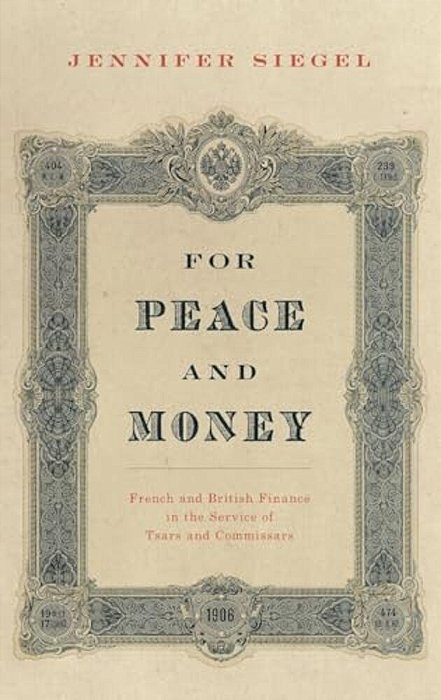
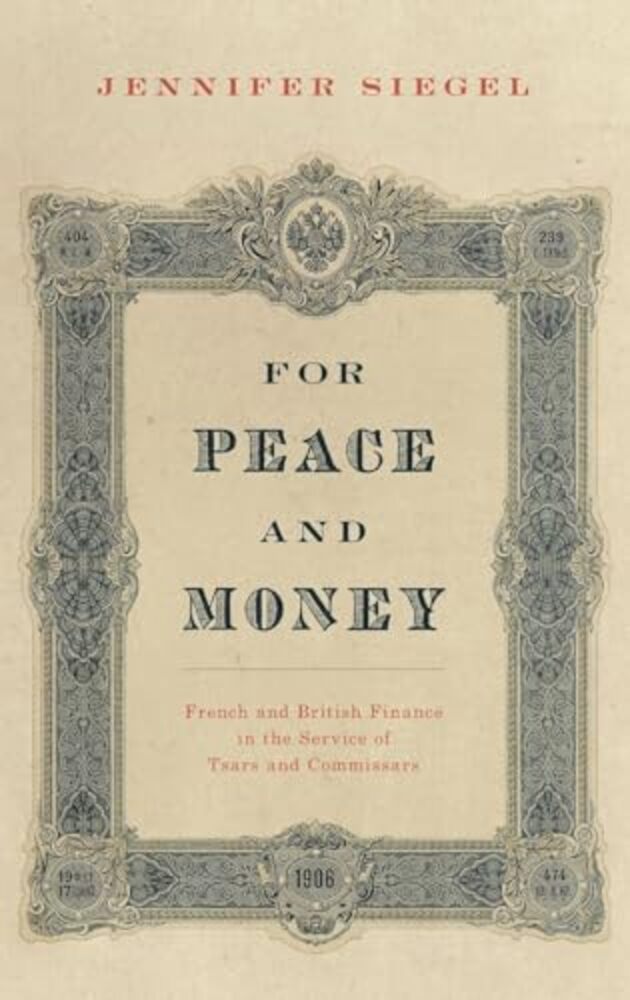
For Peace And Money: French And British Finance In The Service Of Tsars And Commissars-..
até
4x
de
R$ 174,30
sem juros
ou R$ 662,34
via Pix
Adicionar ao carrinho
Disponibilidade: 45 dias úteis
Estoque: 213 unidades
-
- 1x de R$ 697,20 sem juros
- 2x de R$ 348,60 sem juros
- 3x de R$ 232,40 sem juros
- 4x de R$ 174,30 sem juros
-
R$ 662,34

-
R$ 697,20


From the late imperial period until 1922, the British and French made private and government loans to Russia, making it the foremost international debtor country in pre-World War I Europe. To finance the modernization of industry, the construction of public works projects, the building of railroads, and the development of the military-industrial complex, Russia's ministers of finance, municipal leaders, and nascent manufacturing class turned, time and time again, to foreign capital. From the forging of the Franco-Russian alliance onwards, Russia's needs were met, first and foremost, by France and Great Britain, its allies, and diplomatic partners in the developing Triple Entente. Russia's continued access to those ready lenders ensured that the empire of the Tsars would not be tempted away from its alliance and entente partners. This web of financial and political interdependence affected both foreign policy and domestic society in all three countries. The Russian state was so heavily indebted to its western creditors, rendering those western economies almost prisoners to this debt, that the debtor nation in many ways had the upper hand; the Russian government at times was actually able to dictate policy to its French and British counterparts. Those nations' investing classes-which, in France in particular, spanned not only the upper classes but the middle, rentier class, as well-had such a vast proportion of their savings wrapped up in Russian bonds that any default would have been catastrophic for their own economies. That default came not long after the Bolshevik Revolution brought to power a government who felt no responsibility, whatsoever, for the debts accrued by the tsars for the purpose of oppressing Russia's workers and peasants. The ensuing effect on allied morale, the Anglo-French relationship, and, ultimately, on international relations in the twentieth century, was grim and far-reaching. Jennifer Siegel narrates a classic tale of money and power in the modern era-an age of economic interconnectivity and great power interdependency-involving such figures as Lord Revelstoke, chairman of Baring Brothers, the British and French Rothschild cousins, and Sergei Witte, Russia's authoritative finance minister during much of this age of expansion. For Peace and Money highlights the importance of foreign capital in policymaking on the origins and conduct of World War I.
| ISBN | 9780199387816 |
| Autor(a) | Siegel, Jennifer |
| Editora | Oup US |
| Ano de edição | 2014 |
| Páginas | 328 |
| Acabamento | Capa Dura |
| Dimensões | 23,80 X 17,70 |
Produtos relacionados
-
 The Catholic Church And Russia: Popes, Patriarchs, Tsars And Commissars-..
R$ 539,42R$ 431,54até 4x de R$ 107,88 sem jurosou R$ 409,96 via Pix20% Desconto -
Money, Finance And Empire: 1790-1960-..
R$ 207,42R$ 165,94até 3x de R$ 55,31 sem jurosou R$ 157,64 via Pix20% Desconto -
The World's Money (Rle: Banking & Finance)-..
R$ 1.942,12R$ 1.553,70até 4x de R$ 388,42 sem jurosou R$ 1.476,02 via Pix20% Desconto -
Simple Money: A No-Nonsense Guide To Personal Finance-..R$ 166,00até 3x de R$ 55,33 sem jurosou R$ 157,70 via Pix
-
Categorias
Pague com

Selos

MYRE EDITORA, COMERCIALIZADORA, IMPORTADORA E DISTRIBUIDORA LTDA - CNPJ: 50.295.718/0001-20 © Todos os direitos reservados. 2026
