


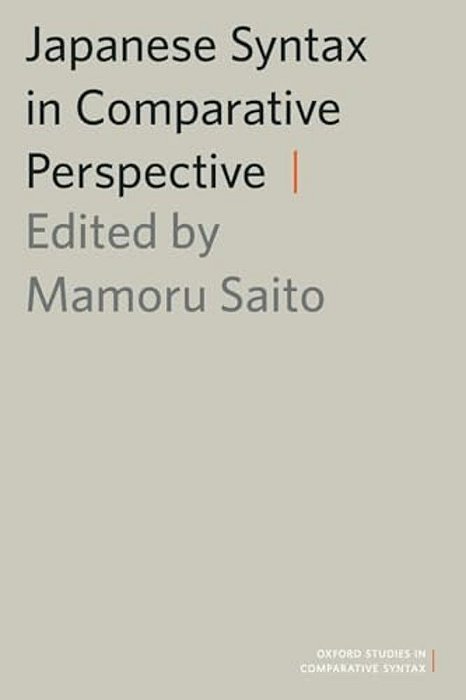
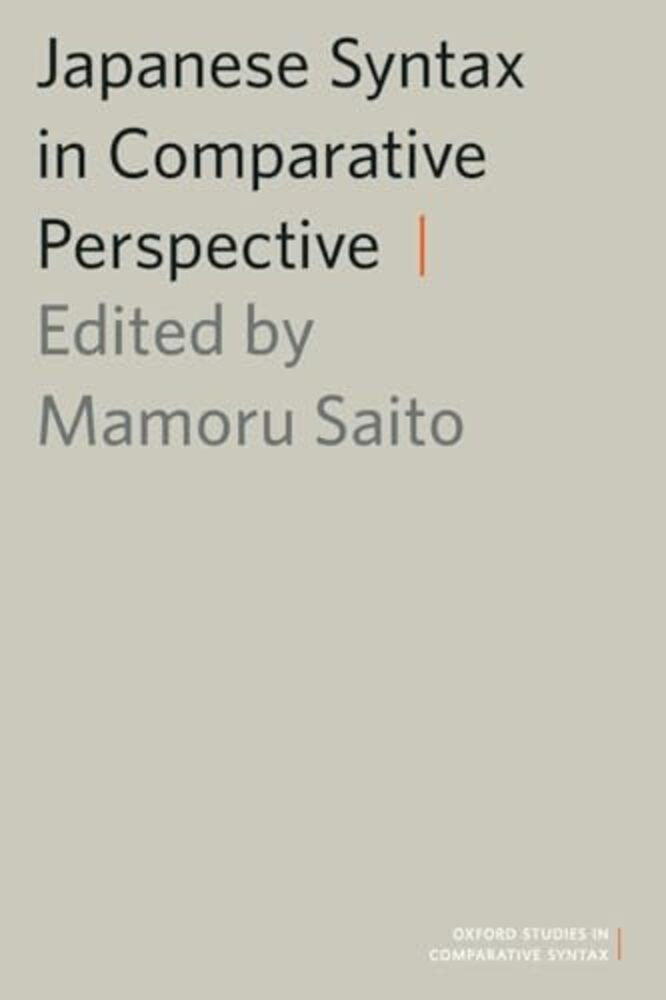
Japanese Syntax In Comparative Perspective-..
até
4x
de
R$ 109,56
sem juros
ou R$ 416,33
via Pix
Adicionar ao carrinho
Disponibilidade: 45 dias úteis
Estoque: 160 unidades
-
- 1x de R$ 438,24 sem juros
- 2x de R$ 219,12 sem juros
- 3x de R$ 146,08 sem juros
- 4x de R$ 109,56 sem juros
-
R$ 416,33

-
R$ 438,24


This book examines the syntax of Japanese in comparison with other Asian languages within the Principles-and-Parameters framework. It grows out of a collaborative research project on comparative syntax pursued at the Center for Linguistics at Nanzan University from 2008-2013, in collaboration with researchers at Tsing Hua (Hsinchu, Taiwan), Connecticut, EFL U. (Hyderabad, India), Siena, and Cambridge. In ten chapters, the book compares the syntax of Japanese to that of Chinese, Korean, Turkish, Hindi, and Malayalam, focusing on ellipsis, movement, and Case. The first three chapters compare nominal structures in Japanese and Chinese and account for the differences between them. An important point of comparison in these chapters is the patterns of N'-ellipsis the two languages exhibit. The subsequent two chapters focus on ellipsis. One examines argument ellipsis in Japanese, Turkish, and Chinese, and argues for its correlation with the absence of
| ISBN | 9780199945221 |
| Autor(a) | Saito, Mamoru |
| Editora | Oxford University Press - USA |
| Ano de edição | 2014 |
| Páginas | 336 |
| Acabamento | Brochura |
| Dimensões | 23,10 X 15,50 |
Produtos relacionados
-
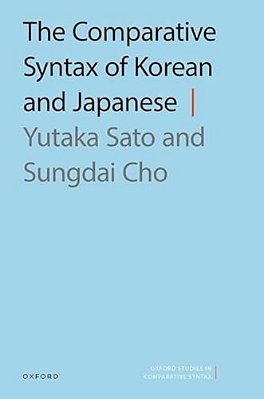 The Comparative Syntax Of Korean And Japanese-..
R$ 1.037,50R$ 830,00até 4x de R$ 207,50 sem jurosou R$ 788,50 via Pix20% Desconto -
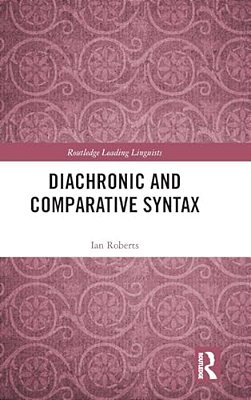 Diachronic And Comparative Syntax-..
R$ 1.942,12R$ 1.553,70até 4x de R$ 388,42 sem jurosou R$ 1.476,02 via Pix20% Desconto -
 Diachronic And Comparative Syntax-..
R$ 556,02R$ 444,82até 4x de R$ 111,20 sem jurosou R$ 422,58 via Pix20% Desconto -
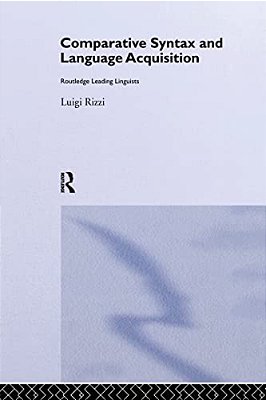 Comparative Syntax And Language Acquisition-..
R$ 1.386,02R$ 1.108,82até 4x de R$ 277,20 sem jurosou R$ 1.053,38 via Pix20% Desconto
-

Categorias
Pague com

Selos

MYRE EDITORA, COMERCIALIZADORA, IMPORTADORA E DISTRIBUIDORA LTDA - CNPJ: 50.295.718/0001-20 © Todos os direitos reservados. 2026
