


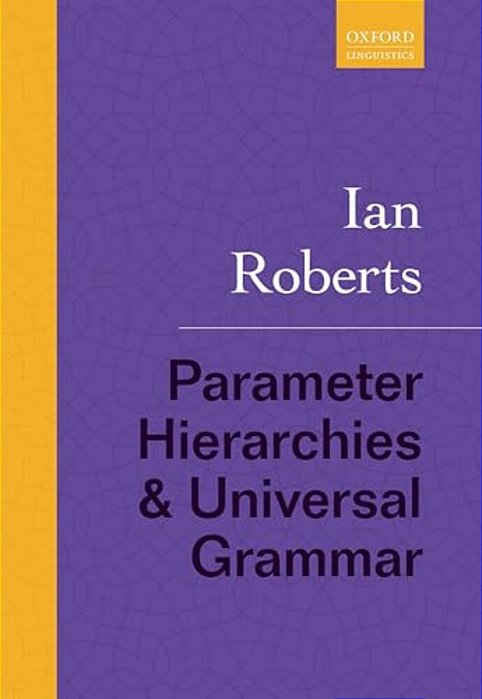
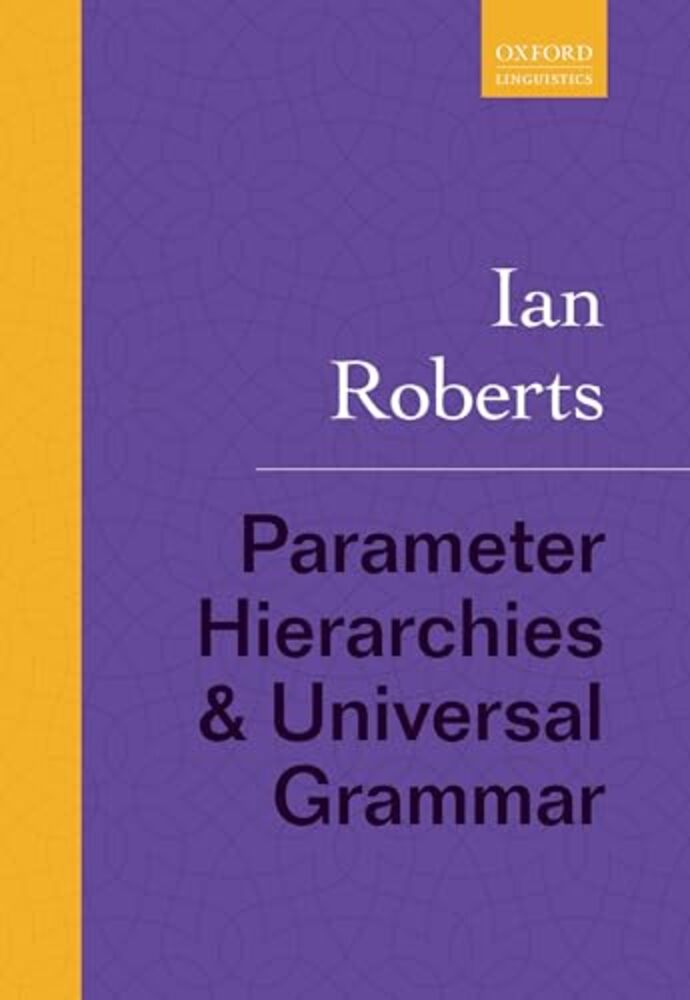
Parameter Hierarchies And Universal Grammar-..
até
4x
de
R$ 323,70
sem juros
ou R$ 1.230,06
via Pix
Adicionar ao carrinho
Disponibilidade: 45 dias úteis
Estoque: 212 unidades
-
- 1x de R$ 1.294,80 sem juros
- 2x de R$ 647,40 sem juros
- 3x de R$ 431,60 sem juros
- 4x de R$ 323,70 sem juros
-
R$ 1.230,06

-
R$ 1.294,80


This book develops a minimalist approach to cross-linguistic morphosyntactic variation. Ian Roberts argues that the essential insight of the principles-and-parameters approach to variation can be maintained - albeit in a somewhat different guise - in the context of the minimalist program for linguistic theory. The central idea is to organize the parameters of Universal Grammar (UG) into hierarchies that define the ways in which properties of individually variant categories and features may act in concert. A further leading idea, which is consistent with the overall goal of the minimalist programme to reduce the content of UG, is that the parameter hierarchies are not directly determined by UG, and are instead emergent properties stemming from the interaction of the three factors in language design. Cross-linguistic variation in word order, null subjects, incorporation, verb-movement, case/alignment, wh-movement, and negation are all analyzed in the light of this approach. This book represents a significant new contribution to the formal study of cross-linguistic morphosyntactic variation on both the empirical and theoretical levels, and will appeal to researchers and students in all areas of theoretical linguistics and comparative syntax.
Roberts, Ian
Ian Roberts possui graduação em Linguística pela Universidade de Gales e doutorado na University of Southern California. É professor titular da Universidade de Cambridge e tem sido professor visitante no Brasil em várias universidades. É autor de Verbs and Diachronic Syntax (Kluwer), Comparative Syntax (Arnold), Diachronic Syntax (Oxford); coautor de Syntactic Change: a Minimalist Approach to Grammaticalization (Cambridge), Clause Structure and Language Change (Cambridge), Parametric Variation: Null Subjects in Minimalist Theory (Cambridge), Locality (Oxford). Pela Contexto é organizador do livro "Português brasileiro:uma viagem diacrônica". |
| ISBN | 9780198804635 |
| Autor(a) | Roberts, Ian |
| Editora | Oxford University Press - USA |
| Ano de edição | 2019 |
| Páginas | 730 |
| Acabamento | Capa Dura |
| Dimensões | 24,60 X 17,00 |
Produtos relacionados
-
 Parameter Setting-..
R$ 1.410,92R$ 1.128,74até 4x de R$ 282,18 sem jurosou R$ 1.072,30 via Pix20% Desconto -
 Parameter Setting-..
R$ 1.410,92R$ 1.128,74até 4x de R$ 282,18 sem jurosou R$ 1.072,30 via Pix20% Desconto -
 The Hierarchies-..
R$ 199,20R$ 159,36até 3x de R$ 53,12 sem jurosou R$ 151,39 via Pix20% Desconto -
 The Polysynthesis Parameter-..
R$ 2.490,00R$ 1.992,00até 4x de R$ 498,00 sem jurosou R$ 1.892,40 via Pix20% Desconto
-

Categorias
Pague com

Selos

MYRE EDITORA, COMERCIALIZADORA, IMPORTADORA E DISTRIBUIDORA LTDA - CNPJ: 50.295.718/0001-20 © Todos os direitos reservados. 2026
