


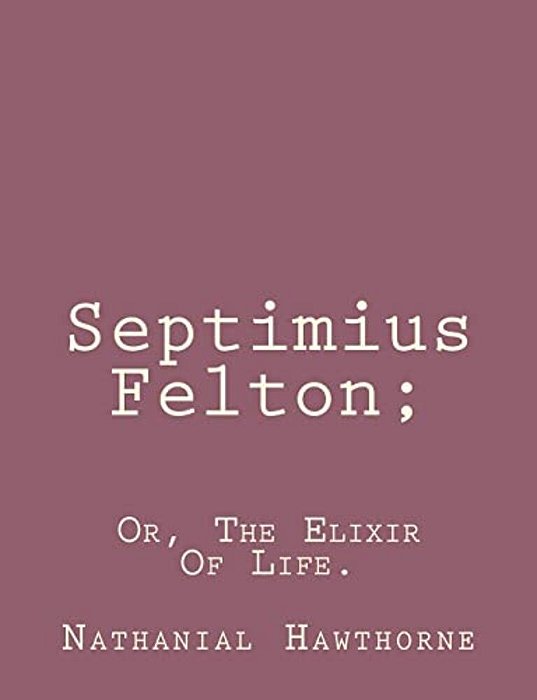
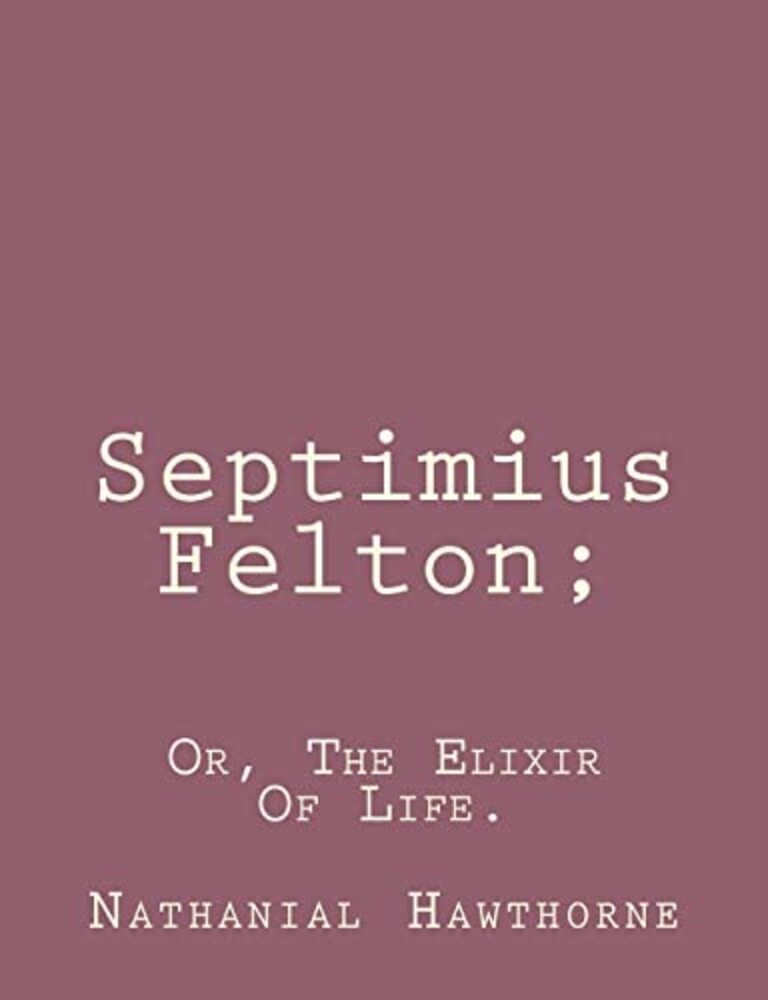
Septimius Felton;: Or, The Elixir Of Life. -..
Adicionar ao carrinho
Disponibilidade: 45 dias úteis
Estoque: 209 unidades
-
R$ 63,02

-
R$ 66,34

-
R$ 66,34

Excerpt from Septimius Felton: Or the Elixir of Life Stretched, with one or two breaks and interruptions, into the heart of the village of Concord, the county town. It was in the side of this hill that, according to tradition, the first settlers of the village had burrowed in caverns which they had dug out for their shelter, like swallows and woodchucks. As its slope was towards the south, and its ridge and crowning woods defended them from the northern blasts and snow-drifts, it was an admirable situation for the fierce New England winter; and the temperature was milder, by several degrees, along this hillside than on the unprotected plains, or by the river, or in any other part of Concord. So that here, during the hundred years that had elapsed since the first settle ment of the place, dwellings had successively risen close to the hill's foot, and the meadow that lay on the other side of the road a fertile tract had been cultivated; and these three young people were the children's chil dren's children of persons of respectability who had dwelt there, Rose Garfield, in a small house, the site of which is still indicated by the cavity of a cellar, in which I this very past summer planted some sun?owers to thrust their great disks out from the hollow and allure the bee and the humming-bird; Robert Hagburn, in a house of some what more pretension, a hundred yards or so nearer to the village, standing back from the road in the broader space which the retreating hill, cloven by a gap in that place, afforded; where some elms intervened between it and the road, offering a site which some person of a nat ural taste for the gently picturesque had seized upon. About the Publisher Forgotten Books publishes hundreds of thousands of rare and classic books. Find more at www.forgottenbooks.com This book is a reproduction of an important historical work. Forgotten Books uses state-of-the-art technology to digitally reconstruct the work, preserving the original format whilst repairing imperfections present in the aged copy. In rare cases, an imperfection in the original, such as a blemish or missing page, may be replicated in our edition. We do, however, repair the vast majority of imperfections successfully; any imperfections that remain are intentionally left to preserve the state of such historical works.
Hawthorne, Nathaniel
Nathaniel Hawthorne nasceu em Salém, Massachusetts, Estados Unidos, no dia 4 de julho de 1804. Era neto de um juiz que participou do julgamento das feiticeiras de Salém. Estudou no Bowdoin College, no Maine. De volta à sua cidade natal escreveu vários contos sobre o período colonial americano, reunidos em “Twice-Told Tales” (1837).
Entre 1839 e 1840 trabalhou como inspetor da Alfândega de Boston. Em 1842 casou-se com Sophia Peabody e mudou-se para Old Manse, em Concord. Nessa época escreveu diversos contos que foram reunidos em “Mosses From na Old Manse” (Musgos de um Velho Solar) (1846).
Em 1949 foi demitido do seu cargo na Alfândega, passando a se dedicar inteiramente à literatura. Em 1850 publicou o romance “A Letra Escarlate”, que se tornou uma obra-prima. Em seguida publicou, “A Casa das Sete Torres” (1851) e “The Blithedale Romance” (1852).
Entre 1853 e 1857 foi nomeado cônsul norte-americano em Liverpoll, na Inglaterra. Publicou “O Fauno de Mármore” (1860). Nesse mesmo ano volta para Concord, onde começa vários livros sem conseguir concluí-los. Faleceu em Plymouth, em Nova Hampshire, Estados Unidos, no dia 19 de maio de 1864. |
| ISBN | 9781494460457 |
| Autor(a) | Hawthorne, Nathaniel |
| Editora | Createspace |
| Ano de edição | 2013 |
| Páginas | 182 |
| Acabamento | Brochura |
| Dimensões | 24,60 X 18,90 |
Produtos relacionados



Categorias
Pague com

Selos

MYRE EDITORA, COMERCIALIZADORA, IMPORTADORA E DISTRIBUIDORA LTDA - CNPJ: 50.295.718/0001-20 © Todos os direitos reservados. 2026
